Abstract:Petroleum coke is a byproduct obtained through deep thermal cracking (coking) of heavy residual oil after distillation separates light oils from crude oil. When
Petroleum coke is a byproduct obtained through deep thermal cracking (coking) of heavy residual oil after distillation separates light oils from crude oil. When ground into powder of varying fineness, its application value is greatly expanded, with primary uses as follows:
1. Energy Fuel Sector (Primary Use)
This represents the largest application of petroleum coke powder. Owing to its high calorific value (approaching that of coal) and low cost, finely ground petroleum coke serves as a premium fuel widely used in:
Cement Industry: In rotary kilns for the new dry process cement production, it functions as primary or auxiliary fuel, partially replacing coal to reduce production costs.
Power Plants and Heating Utilities: As fuel in specially designed boilers for electricity generation or district heating.
Industrial Kilns for Glass, Ceramics, etc.: Providing a stable and efficient heat source.
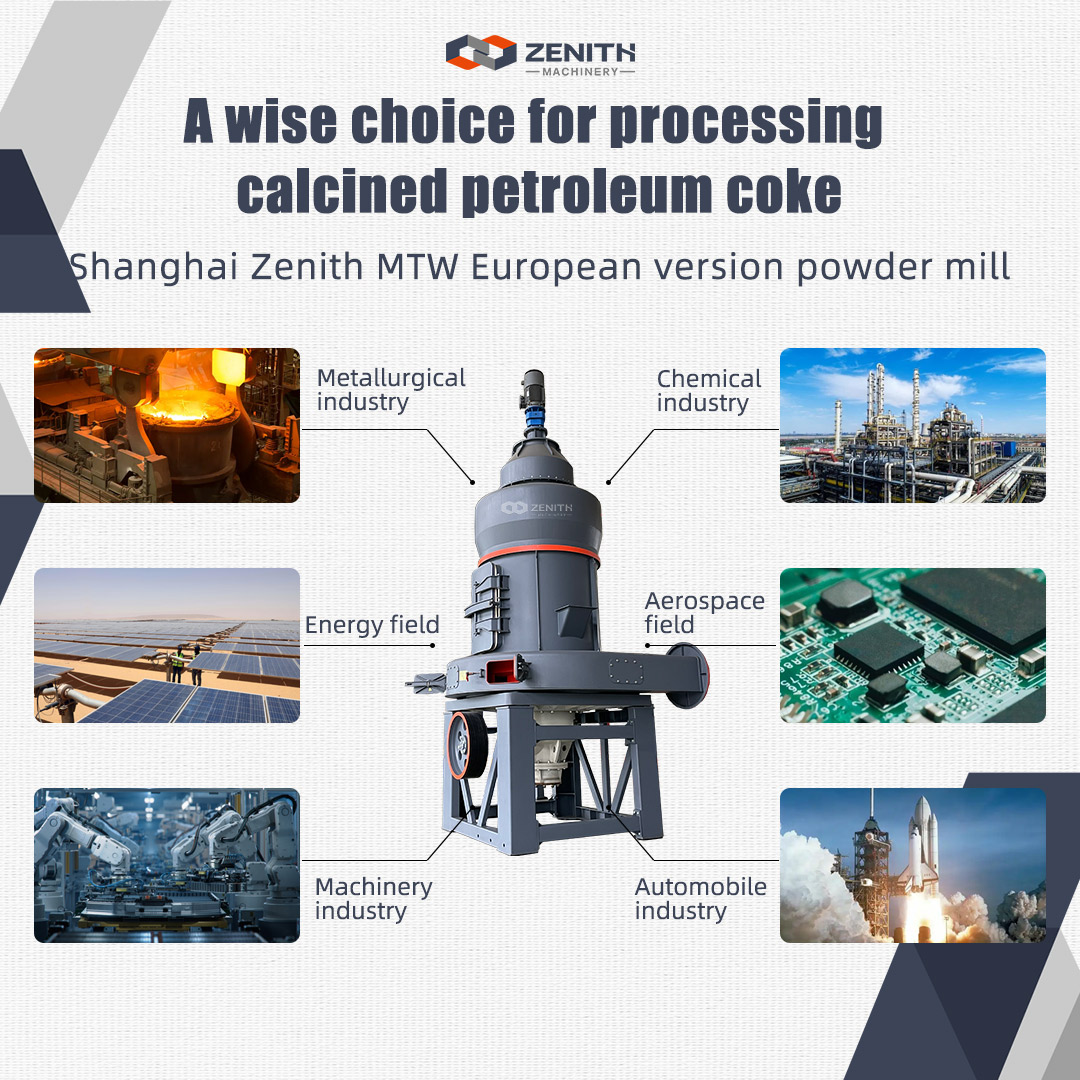
2. Carbon Materials and Metallurgy (High-Value Applications)
This represents the core application for calcined petroleum coke powder, primarily leveraging its high carbon content and low impurity characteristics.
Prebaked Anodes for Aluminum: The most critical application. Petroleum coke powder is mixed with coal tar pitch, formed, and baked to produce anode blocks essential for the electrolytic aluminum industry, serving as an irreplaceable consumable material in aluminum smelting.
Graphite Electrodes: High-purity, low-sulfur calcined coke powder serves as the key raw material for manufacturing graphite electrodes used in electric arc furnace steelmaking.
Carbon Additives: In the iron and steel casting industry, it is added to molten iron as a carbon additive to adjust and control the carbon content of molten steel or iron.
Other Carbon Products: Used in the production of carbon blocks, anode paste, battery negative electrode materials, etc.
3. Chemical and Other Applications
Silicon Carbide Production: Serves as the primary carbon source, reacting with quartz sand in high-temperature electric furnaces to produce industrial abrasive silicon carbide.
Fillers and Additives: Small quantities of ultra-fine coke powder can function as fillers in plastics, rubber, and other materials, or serve as feedstock for specific chemical processes.
leave your message here, we'll send you
an Email immediately.